Tank vs Tankless Water Heater for a PNW Home: Which One Actually Makes Sense?
September 26, 2026
Quick Answer: For most Kitsap Peninsula homes on a private well, a well-maintained tank water heater tends to handle hard water and iron better over time, while a tankless unit can still work well if you pair it with proper filtration and a stricter flushing schedule. The right choice depends less on brand preference and more on what's actually in your water, how many people rely on hot water at once, and whether your home is set up to maintain a tankless unit's tighter internal passages. Neither system is immune to mineral buildup here. The one that lasts is the one that's matched to your specific water and maintained on a schedule that fits it.
You turn on the shower, and for a second the water sputters before it evens out. Or maybe your neighbor just installed a sleek tankless unit and you're wondering if your old tank, humming away in the garage, is due for a modern upgrade. Either way, if your home sits on a well anywhere from Seabeck to Poulsbo, the tank-versus-tankless conversation isn't quite the same one your cousin in Seattle had with her city-water plumber.
Well water changes the math. Groundwater across the Kitsap Peninsula tends to carry a mix of dissolved minerals, iron, and manganese picked up as it moves through rock and soil, and hardness levels vary block to block depending on which aquifer feeds your well. That mineral load doesn't care whether you choose a tank or a tankless system. It just goes looking for somewhere to settle. Your job is figuring out which type of water heater handles that reality with the least hassle for your household.
What Well Water Actually Does Inside a Water Heater
Here's the part most manufacturer brochures skip. City water is treated before it ever reaches a water heater, and municipal treatment plants strip out a lot of the sediment and adjust hardness before it hits your pipes. Well water skips that step entirely. Whatever minerals, sand, or fine sediment are in your ground get pulled straight into your plumbing, untreated, unless you're already running filtration.
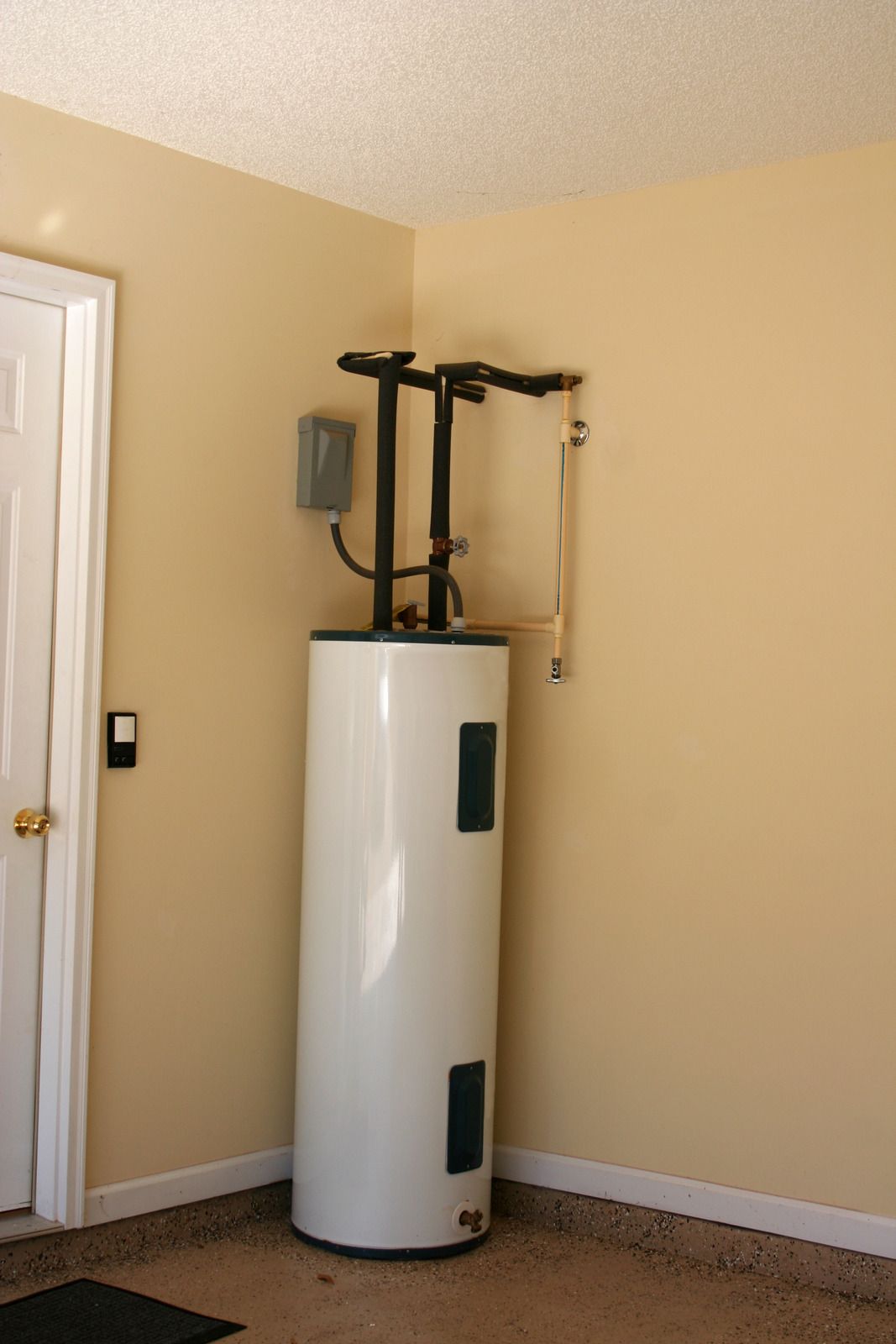
Inside a tank system, that sediment settles at the bottom, where it sits on top of the burner or heating element. Over months, it hardens into a crusty layer that insulates the tank from the heat source, forcing the unit to work harder and run longer to reach the same temperature. Inside a tankless unit, there's no tank bottom for sediment to collect on. Instead, water gets forced through a compact heat exchanger with narrow internal channels, and that's exactly where calcium and magnesium like to plate out as scale. Smaller passages mean less room before flow gets restricted.
Both problems come from the same source. They just show up differently, on different timelines, with different consequences if you ignore them.
Where a Tank Water Heater Holds Its Own
A traditional tank has one real advantage on well water: forgiveness. Sediment can accumulate for a while before it causes a real problem, and a tank that's flushed on a reasonable schedule can shrug off moderate hardness and iron content for years. The heating element or burner sits below a layer of water even when sediment builds up, so there's some buffer before things get bad enough to damage the tank itself.
There's also the matter of storage. A 40- or 50-gallon tank keeps a reservoir of water already heated and ready to go, which matters more than people expect on a well system. Wells feed a pressure tank, not unlimited city pressure, and a storage-based water heater doesn't ask your well pump to keep pace with real-time demand the way a tankless unit does. If two people are showering while the dishwasher runs, a tank just pulls from what's already hot.
None of that means a tank is maintenance-free. Iron-heavy well water can still cause premature anode rod failure, tank corrosion, and enough sediment buildup to shorten the unit's working life if it's never flushed. But a tank tends to fail slowly and give warning signs first, rather than losing capacity all at once.
Where Tankless Units Struggle With Mineral-Heavy Water
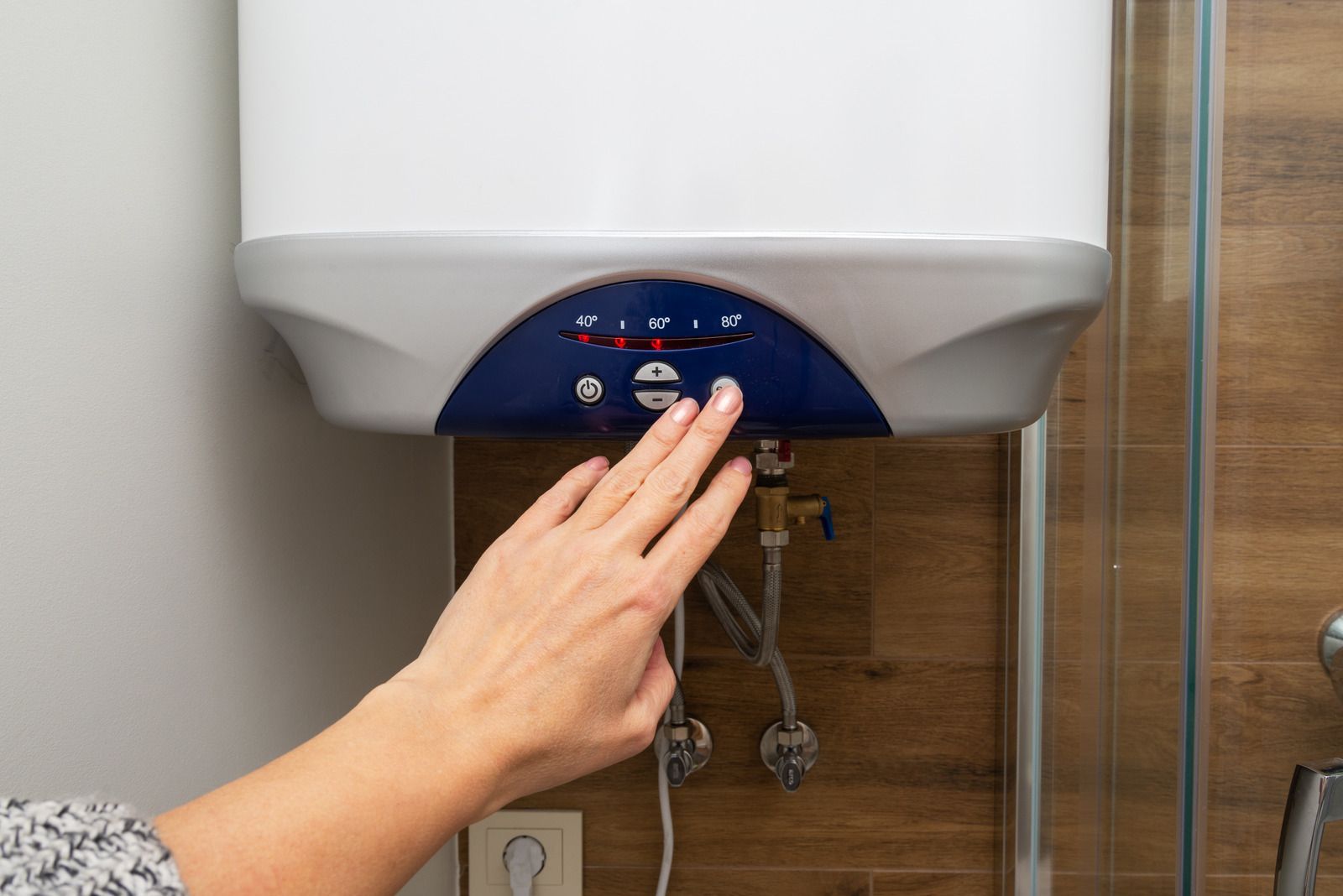
A tankless heater's efficiency comes from its size. Water passes through a compact heat exchanger and gets heated almost instantly, which is great for on-demand hot water and takes up far less space than a 50-gallon tank, something worth considering in a smaller mechanical room or an older Kitsap County home without a lot of extra square footage.
That same compact design is also the weak point on well water. The narrow channels in a tankless heat exchanger scale up faster than the wide-open interior of a tank, and once calcium and magnesium start coating those passages, flow rate and heating performance both drop. Unlike sediment settling harmlessly at the bottom of a tank, scale inside a tankless unit sits directly in the path of every gallon that passes through, working against the unit from day one instead of building up slowly out of the way.
Iron adds its own wrinkle. Even modest iron content can leave reddish-brown staining inside a tankless heat exchanger, and once that mineral film sets up alongside calcium scale, a standard vinegar flush stops being enough to fully clear it. At that point you're looking at more aggressive descaling or, in some cases, heat exchanger replacement well before the unit's rated lifespan.
TIP: If you already have a tankless unit on well water, ask about isolation valves at your next service call. They let a technician flush the heat exchanger with a descaling solution without disconnecting the whole unit, which turns an annual maintenance job into something that takes far less time.
Cold Groundwater and Real-World Flow Rate
There's a factor that rarely comes up outside the Pacific Northwest specifically: how cold your well water actually is. Groundwater across this region tends to run noticeably colder year-round than the surface water many manufacturer specs are based on, and colder incoming water means a tankless unit has to work through a much bigger temperature rise to deliver a comfortable shower.
A tankless heater's maximum output is really a trade-off between flow rate and temperature rise. Push more gallons per minute through the unit and it has less time to heat each one, so on truly cold incoming water, a unit sized for a warmer climate can fall short exactly when two fixtures run at once. That's not a defect. It's physics, and it's one more reason a "one size fits every house" tankless recommendation doesn't really apply here.
A tank sidesteps that problem because it heats water gradually, over time, and stores the result. Recovery might take a little longer on very cold well water, but the shower itself doesn't care how long the tank took earlier that morning to bring 50 gallons up to temperature. For homes with simultaneous heavy use, that buffer often matters more than the tankless unit's on-demand convenience.
What This Means for Cabins and Seasonal Properties
A fair number of properties out toward Hansville, Manchester, and the more wooded stretches of the peninsula sit vacant for weeks at a time between visits. Water that sits still in a tank for an extended stretch tends to concentrate whatever minerals were already dissolved in it, and iron content in particular can settle out and darken standing water in a way that's obvious the first time you turn on the tap after a few weeks away.
A tankless system doesn't hold standing water the same way, which sounds like an advantage for a seasonal cabin until you consider the flip side: a tankless unit that sits unused and unwinterized through a cold snap is far less forgiving of a missed drain-down than a tank is. Either system needs a plan for a property that isn't occupied full time, and that plan should account for well water quality, not just freeze protection.
WARNING: Never assume a tankless unit is "self-cleaning" just because water doesn't sit in it. Scale still forms during every heating cycle on hard or iron-heavy water, whether the unit runs constantly or just occasionally over a season. Skipping descaling because the property isn't occupied full time usually backfires by the second or third year.
Making the Right Call for Your Property
Before you decide anything, get your well water tested for hardness and iron content specifically, not just a general safety test. That single piece of information does more to answer the tank-versus-tankless question than any spec sheet or online comparison chart, because a property with soft, low-iron well water can run either system with minimal fuss, while a property with hard, iron-rich water needs a plan built around whichever unit you choose.
If you go tankless on well water here, plan on annual descaling at minimum, and consider it every six months if your test results come back on the harder end. Pair the unit with a properly sized sediment prefilter, and if hardness numbers are high, a water softener or conditioner ahead of the heater will extend the heat exchanger's working life considerably. If you stick with a tank, commit to an annual flush and keep an eye on anode rod condition, since iron-heavy water eats through a standard anode faster than a treated municipal supply would.
Household size and how you actually use hot water matter just as much as water chemistry. A single-occupant cabin with modest demand can make a tankless system look great on paper, while a full-time family home running back-to-back showers and laundry loads might get more consistent, lower-maintenance performance out of a properly sized tank, even with well water working against it.
Frequently Asked Questions
Does hard well water ruin a tankless water heater faster than a tank?
It can, if maintenance doesn't match your specific water. Scale builds fast in a tankless unit's narrow passages, so a neglected one loses performance sooner than a neglected tank, which tolerates sediment longer before failing.
Do I need a water softener if I install a tankless water heater on well water?
Not always, it depends on your test results. High hardness numbers mean a softener cuts descaling frequency and extends the heat exchanger's life. Moderate hardness may only need a sediment prefilter and strict annual flushing.
How often should I flush a tank water heater on well water?
Once a year is the baseline for most well-water homes here, twice a year if iron or hardness tests high. Skipping flushes lets sediment compact into a stubborn layer, shortening the tank's overall lifespan considerably.
Why does my tankless water heater struggle when two showers run at once?
It usually comes down to flow rate versus temperature rise, especially with the cold groundwater common here. A unit sized without accounting for that can hit its heating limit sooner, causing lukewarm or fluctuating water.
Can I switch from a tank to a tankless system without changing anything else in my plumbing?
Usually not without adjustments. Tankless units often need larger gas lines or a dedicated electrical circuit, different venting, and ideally a sediment filter or softener on well water, so have the whole setup evaluated first.
Does iron in well water stain the inside of either type of water heater?
Yes, both are affected, but differently. In a tank, iron settles with sediment and speeds up anode rod wear. In a tankless unit, iron can leave a reddish film that standard descaling won't fully remove.
If my property sits vacant for weeks at a time, does that change which system makes more sense?
It shifts the maintenance concern rather than pointing to one system. A tank holds standing water that can concentrate minerals during long vacancies, while a tankless unit still needs winterization and periodic descaling when idle.
Is a tankless water heater worth it if my well water tests high for hardness?
It can still work well, but only with real commitment: a softener ahead of the unit, a prefilter, and descaling once a year. Skip that upkeep on hard water and expect early heat exchanger service.
Choosing the Water Heater That Fits Your Home
Homeowners across Silverdale and Seabeck, WA deal with groundwater that varies from well to well, which is exactly why a one-size-fits-all recommendation rarely holds up out here. Bill Blair Plumbing
has spent 25
years working through these conditions, seeing which systems age well and which ones need attention sooner. Whichever direction you lean, the
water heater
that lasts longest is the one matched to what's actually running through your pipes, not the one that simply looks best in a showroom.